Gadopentetate dimeglumine is a gadolinium-based MR contrast medium whose imaging effect comes from the interaction between paramagnetic gadolinium, chelate chemistry and the relaxation behavior of nearby water protons. Rather than simply making tissue “brighter,” it changes local MR relaxation rates, particularly T1 relaxation under commonly used contrast-enhanced sequences. FDA labeling describes gadopentetate dimeglumine as a paramagnetic MRI contrast medium, while Beilu classifies its product as a linear, ionic gadolinium chelate.
Understanding terms such as linear, ionic, relaxivity and renal elimination helps explain both how this agent enhances MRI and how it differs from other MR contrast media.
What Is Gadopentetate Dimeglumine?
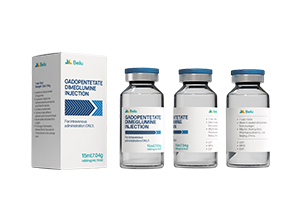
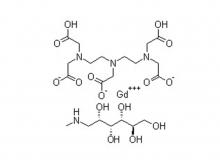
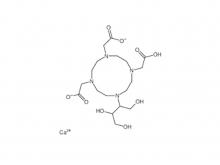
Gadopentetate dimeglumine is a gadolinium-based contrast agent (GBCA) used for contrast-enhanced MRI. Chemically, it is the dimeglumine salt of the gadolinium complex of diethylenetriamine pentaacetic acid, commonly associated with the term Gd-DTPA. FDA labeling describes it as an injectable MRI contrast medium supplied as a 0.5 mol/L solution.
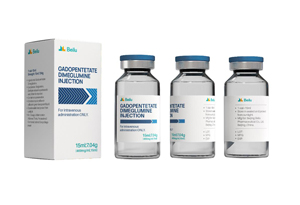
Beilu's current product is classified as a linear, ionic chelate and is supplied at 469 mg/mL in 10, 12, 15 and 20 mL presentations. The product page identifies MRI as the indication and intravenous injection as the route of administration.
Unlike iodinated contrast media used primarily with CT and X-ray imaging, gadopentetate works through magnetic-relaxation effects within an MRI magnetic field rather than through X-ray attenuation.
Why Gadolinium Can Enhance MRI Images
MRI produces images partly by measuring how hydrogen nuclei—especially those associated with water—behave after excitation in a magnetic field.
Gadolinium is strongly paramagnetic. When gadopentetate dimeglumine enters a magnetic field, it develops a magnetic moment that changes the local magnetic environment around nearby water protons. FDA labeling states that this effect increases their relaxation rates and decreases both T1 and T2 relaxation times where the agent accumulates; at usual doses, the predominant effect is on T1 relaxation.
In practical terms:
· Shorter T1 relaxation can increase signal intensity in appropriately designed T1-weighted MRI sequences.
· Different tissue accumulation can increase contrast between tissues, vessels or lesions where enhancement occurs.
· So gadolinium itself does not simply “appear bright.” More accurately, gadopentetate dimeglumine changes the relaxation properties of nearby water protons, which can increase image contrast under appropriate MRI sequences.
What Does “Relaxivity” Mean in an MRI Contrast Agent?
Relaxivity describes how effectively a contrast agent changes the relaxation rate of nearby water protons under defined measurement conditions.
For T1-weighted enhancement, r1 relaxivity is particularly relevant. A higher r1 value means that, per unit concentration under the stated conditions, the contrast agent has a greater effect on longitudinal relaxation rate.
Beilu publishes relaxation-rate values of 4.1 mmol⁻¹·s⁻¹ at 1.5T and 3.7 mmol⁻¹·s⁻¹ at 3.0T for its gadopentetate dimeglumine product.
This also explains why MRI contrast specifications sometimes provide separate measurements at 1.5T and 3.0T. Relaxivity is not a completely fixed property independent of measurement conditions; magnetic field strength and molecular environment can influence it.
However, relaxivity should not be interpreted as a simple ranking in which the agent with the highest number is automatically the “best.” Actual enhancement also depends on concentration, administered dose, MRI sequence, field strength, tissue distribution and the approved clinical use of the specific product.
Linear and Ionic: What These Terms Mean for Gadopentetate Dimeglumine
Two separate classification systems are often used when discussing GBCAs.
Linear versus macrocyclic describes the geometry of the ligand holding the gadolinium ion. Linear ligands have an open-chain arrangement, whereas macrocyclic ligands form a more ring-like structure around gadolinium.
Ionic versus nonionic describes the electrical character of the chelated compound. It is a different classification dimension.
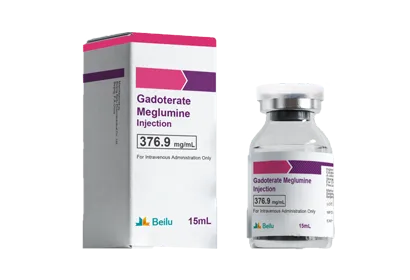
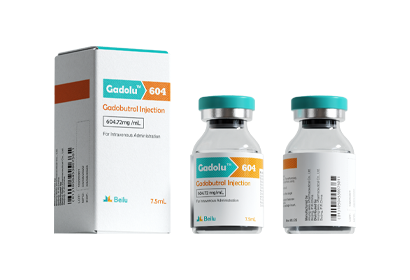
Gadopentetate dimeglumine is therefore correctly described as linear and ionic. Beilu's wider MRI portfolio demonstrates why these terms should not be confused: Gadoterate Meglumine is macrocyclic and ionic, whereas Gadobutrol is macrocyclic and nonionic.
In other words: Linear/macrocyclic describes ligand structure; ionic/nonionic describes electrical character. One does not automatically determine the other.
Gadopentetate Dimeglumine vs Other Gadolinium-Based Contrast Agents
GBCAs all use gadolinium chelation to influence MRI relaxation, but they are not chemically or physically identical.
Characteristic | Gadopentetate Dimeglumine | Gadobutrol | Gadoterate Meglumine |
Structural class | Linear | Macrocyclic | Macrocyclic |
Ionic character | Ionic | Nonionic | Ionic |
Contrast class | GBCA | GBCA | GBCA |
Beilu concentration | 469 mg/mL | 604.72 mg/mL | 376.9 mg/mL |
Beilu also publishes different relaxation-rate values for individual products. Gadobutrol, for example, is listed at 5.2/5.0 mmol⁻¹·s⁻¹ at 1.5T/3.0T, compared with 4.1/3.7 for gadopentetate dimeglumine.
These figures should be understood as product characteristics, not as a stand-alone clinical ranking. Individual GBCAs may also differ in formulation, approved indications, dose and regulatory labeling.
Elimination, Retention and Why GBCA Structure Matters
Beilu lists renal elimination as the primary pathway for gadopentetate dimeglumine and reports a serum elimination half-life of approximately 90 minutes in its product data. FDA labeling similarly states that gadopentetate dimeglumine is excreted through the kidneys and that its serum half-life becomes prolonged when renal function is impaired.
Retention has also become an important part of the broader GBCA discussion. Current FDA labeling for GBCAs states that gadolinium may remain in body tissues for months or years and that, at equivalent doses, linear GBCAs generally produce more retention than macrocyclic GBCAs, while the amount also varies among individual linear agents. Gadopentetate dimeglumine is specifically included among the linear agents discussed in this context.
This is why modern discussion of MR contrast media involves more than image enhancement. Chelate structure, renal elimination, repeated exposure, approved labeling and patient-specific factors are also relevant to clinical decision-making.
This article explains contrast-agent characteristics only; decisions about GBCA administration should follow current approved labeling and qualified healthcare guidance.
Conclusion: Gadopentetate Dimeglumine Connects Chemistry With MRI Physics
Gadopentetate dimeglumine is more than simply an “MRI contrast dye.” Its imaging behavior results from the interaction between paramagnetic gadolinium, chelate chemistry and proton relaxation.
Understanding that it is a linear, ionic GBCA, what relaxivity represents, and how gadolinium affects T1 relaxation provides a clearer explanation of MRI enhancement. At the same time, comparison with macrocyclic agents such as gadobutrol and gadoterate demonstrates why chemical structure alone does not describe every property of an MRI contrast medium.
FAQ
What is gadopentetate dimeglumine?
It is a gadolinium-based injectable contrast medium used for contrast-enhanced MRI.
Is gadopentetate dimeglumine a gadolinium-based contrast agent?
Yes. It is a GBCA containing gadolinium bound within a chelating ligand.
Is gadopentetate dimeglumine linear or macrocyclic?
It is a linear, ionic gadolinium chelate.
How does gadopentetate dimeglumine enhance MRI images?
It alters the relaxation rates of nearby water protons, with its usual-dose effect primarily involving T1 relaxation.
What does relaxivity mean in MRI contrast media?
Relaxivity describes how effectively a contrast agent changes water-proton relaxation rates under specified conditions.
How is gadopentetate dimeglumine different from gadobutrol?
Gadopentetate dimeglumine is linear and ionic, while gadobutrol is macrocyclic and nonionic; they also differ in concentration and published relaxivity characteristics.

 EN
EN
 jp
jp  fr
fr  de
de  es
es  ru
ru  pt
pt  ar
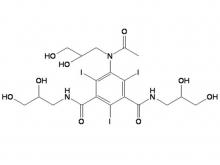
ar 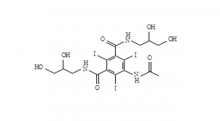 Iohexol Intermediate 5-Amino-N,N'-bis(2,3-dihydroxypropyl)-2,4,6-triiodo-1,3-benzenedicarboxamide
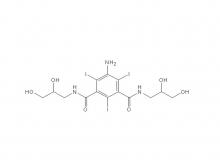 Iohexol/Ioversol Intermediate 5-Amino-N, N'-bis(2,3-dihydroxypropyl)-2,4,6-triiodo-1,3-benzenedicarboxamide
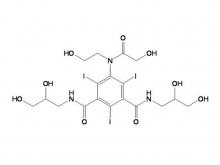
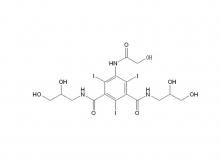 Ioversol Intermediate (order based) N, N'-Bis(2,3-dihydroxypropyl)-5-(glycoloylamino)-2,4,6-triiodoisophthalamide
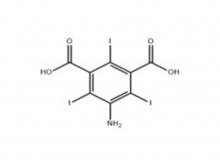 Iopamidol Intermediate (order based) 5-Amino-2,4,6-triiodoisophthalic acid
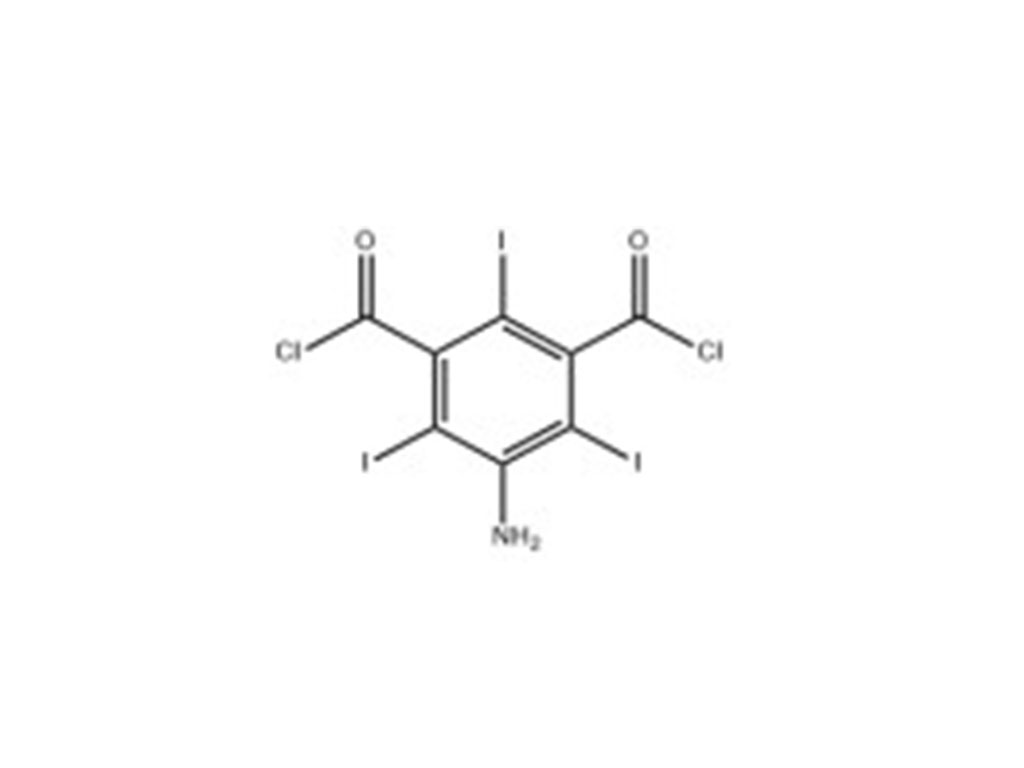
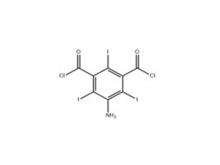 Iopamidol Intermediate (order based) 5-Amino-2,4,6- triiodisophthaloyl acid dichloride
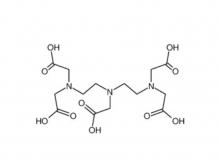 Diethylenetriaminepentaacetic acid (DTPA)




![[New Product] Beilu Pharma Secures Approval for Iomeprol Injection](/uploads/image/20251111/beilu1_400x400.webp)
![[News] Beilu Pharmaceutical's Wholly-owned Subsidiary, Hong Kong Yuanzhi, Obtains Hong Kong Proprietary Chinese Medicine Registration Certificate for Jiuwei Sleep-Aid Granules](/uploads/image/20260126/hk-subsidiary-obtains-registration-jiuwei-granules_20260126092800_400x400.webp)
 Call us on:
  Email Us:
  No.3 Shuiyuan West Road, Miyun District, Beijing, China